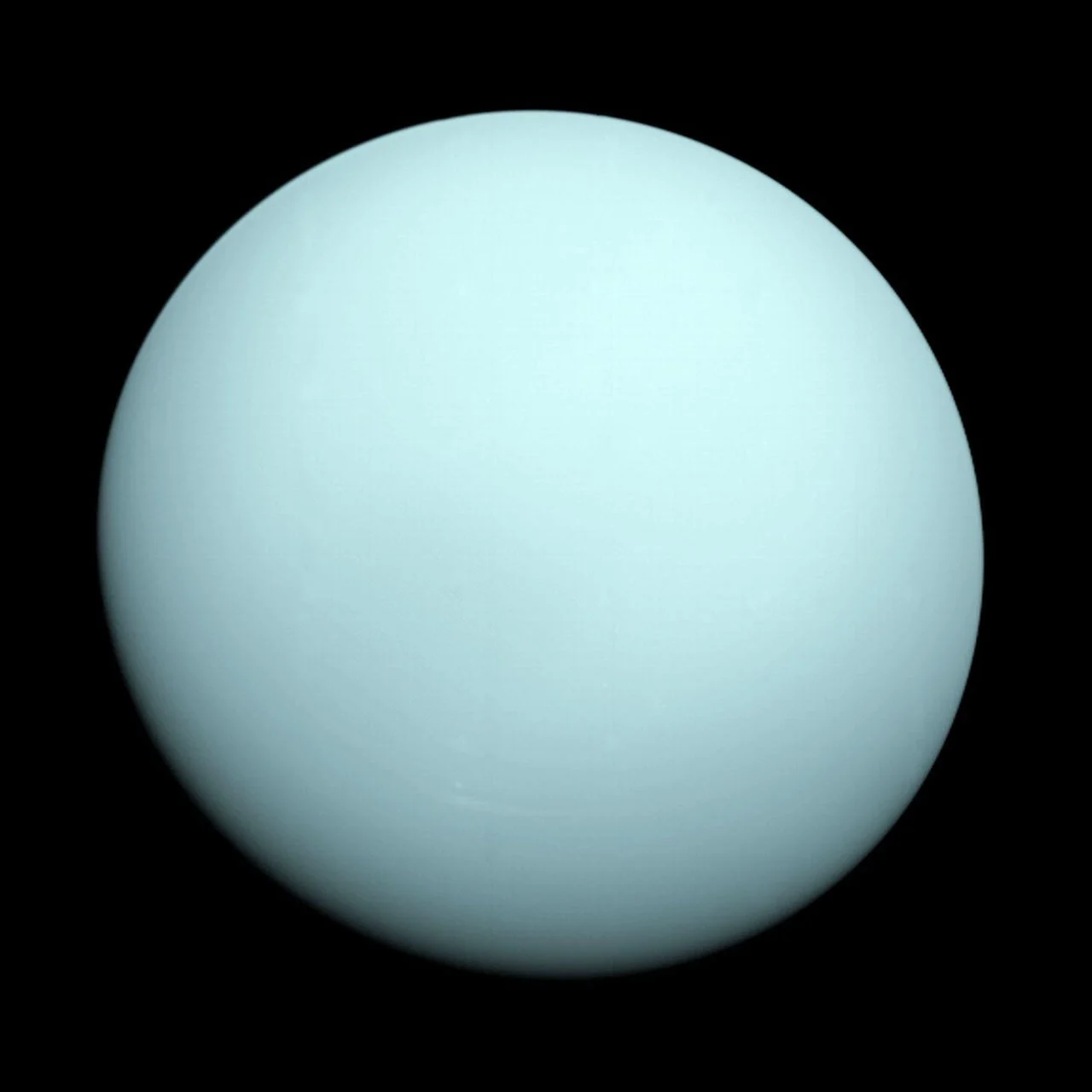
Uranus in near-natural colour as seen by Voyager 2. NASA/JPL-Caltech
Read the storyFrom a distance Uranus looked almost featureless. Up close Voyager found moons, new rings and an unusually tilted magnetic field.
A few hours near Uranus
On January 24, 1986, Voyager 2 passed about 81,500 kilometres above Uranus’s clouds. The team discovered ten moons and two rings. Measurements revealed a magnetic axis strongly tilted relative to the planet’s spin axis.
Source · NASAThe landscape of Miranda
The Miranda mosaic shows rounded regions of complex terrain, deep scarps and cratered areas. The details surprised researchers. For a small icy moon, they point to a complicated geological history.
Source · NASA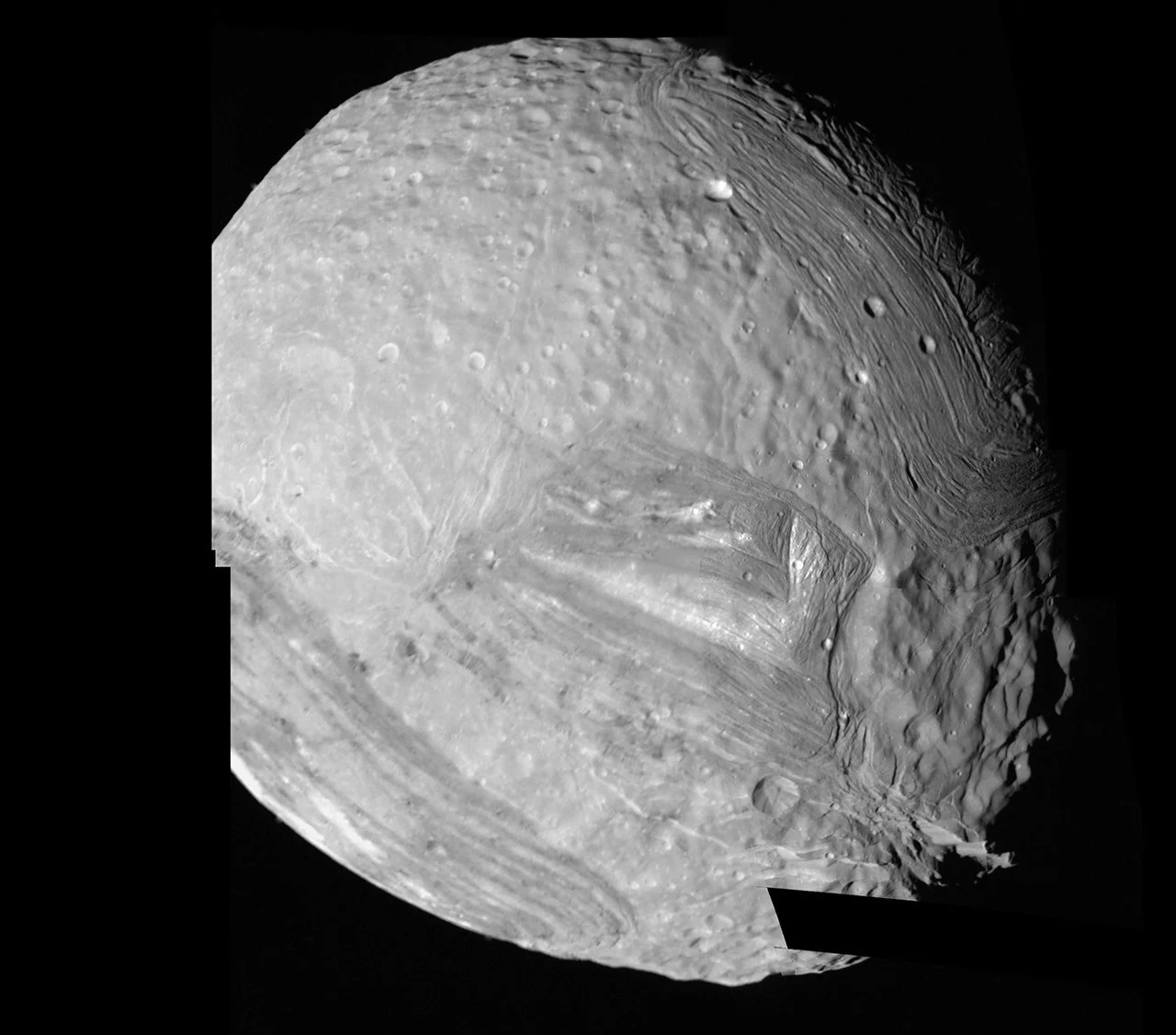
Suzanne Dodd’s first job
Future project manager Suzanne Dodd joined the team out of college. One of her first tasks was designing science sequences for the Uranus encounter. She recalls the work behind those observations in NASA’s collection of first-person accounts.
Source · NASA