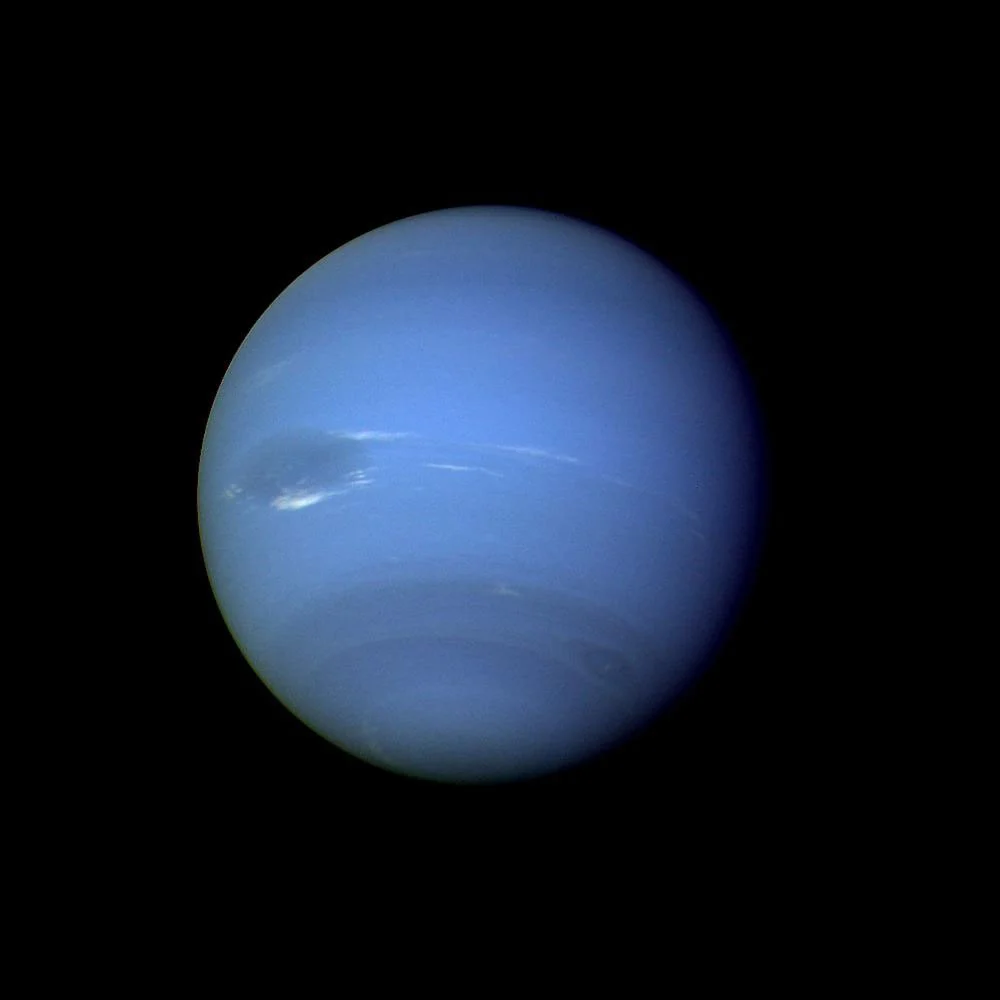
Neptune’s full disc in Voyager 2 images taken on August 16–17, 1989. NASA/JPL-Caltech
Read the storyThe final planet flyby returned the first detailed views of Neptune. On its largest moon the team found signs of activity despite the extreme cold.
A storm at the edge of the planetary system
On August 25, 1989, Voyager 2 passed Neptune, its last planetary stop. Its images revealed the Great Dark Spot, a vast weather system. The spacecraft also returned images of rings that had previously been seen only in part.
Source · NASAWhat rose above Triton
The team picked out dark plumes and streaks carried downwind. They revealed active geysers on icy Triton. The close pass by Triton was designed into the route that took Voyager 2 south of the planets’ orbital plane after Neptune.
Source · NASA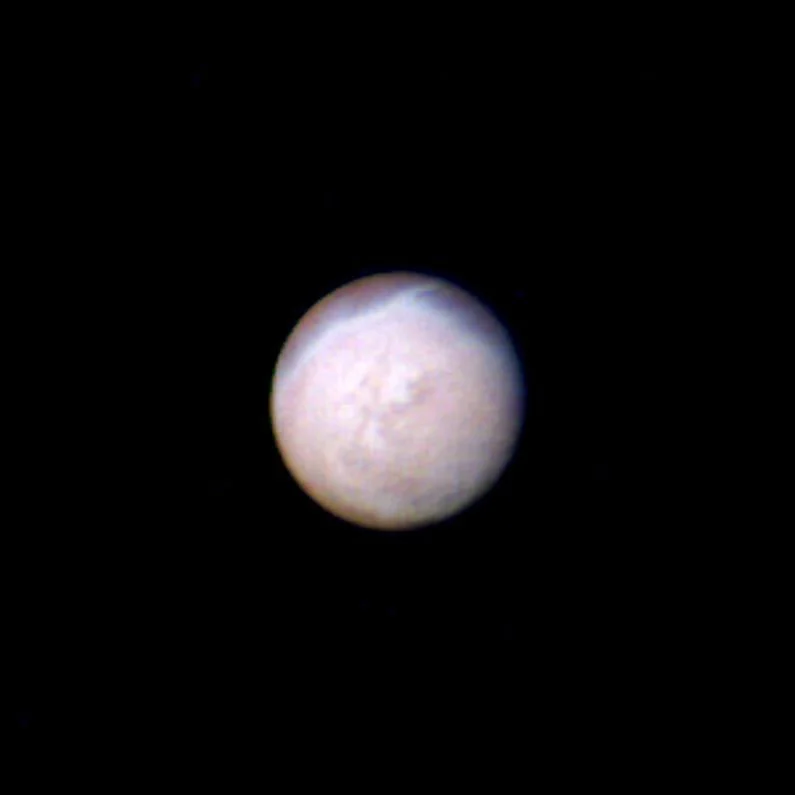
Waiting for the pictures
Radio science team member Tom Spilker recalled feeling like an explorer while new data streamed into JPL. The same retrospective includes Alan Stern’s account of a call from Carl Sagan sharing news about Triton during the encounter.
Source · JPL