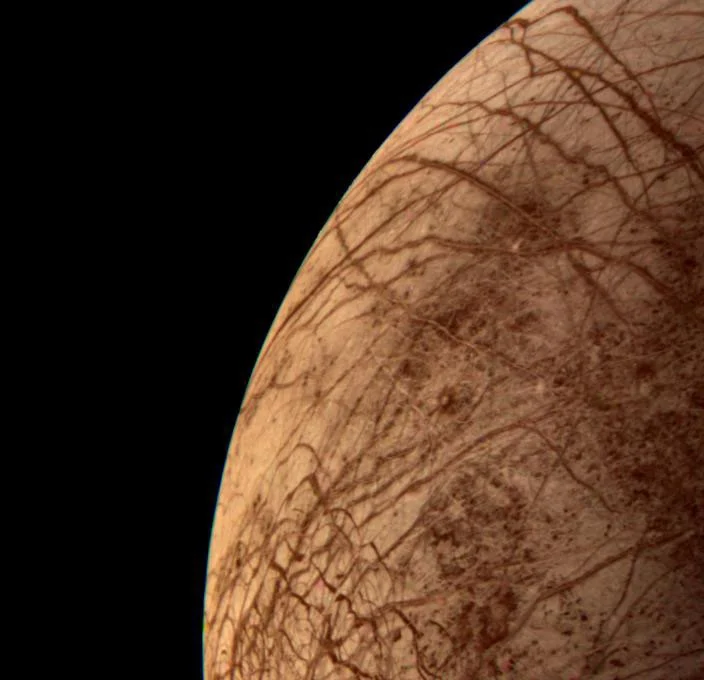
Europa in a Voyager 2 colour image taken on July 9, 1979. NASA/JPL-Caltech
Read the storyA second visit let scientists compare Jupiter with the planet Voyager 1 had seen four months earlier and get a far closer look at Europa.
Why a second visit helped
Voyager 2 passed Jupiter on July 9, 1979. Comparing the March and July images helped scientists track changes in the clouds and on Io. The two flybys let researchers see which features persisted and which changed over time.
Source · NASAA moon criss-crossed with lines
The colour image of Europa shows a network of long dark streaks. Voyager 2’s closer pass resolved more of the icy surface, which has few large craters. Later measurements from Galileo supplied more evidence for a salty ocean under the ice.
Source · NASAEven volcanoes can change in a few months
One of Io’s most conspicuous volcanoes, Pele, produced a tall plume during the March visit. Pele was inactive when Voyager 2 passed in July. The comparison showed how different the same part of Io could look after a few months.
Source · NASA