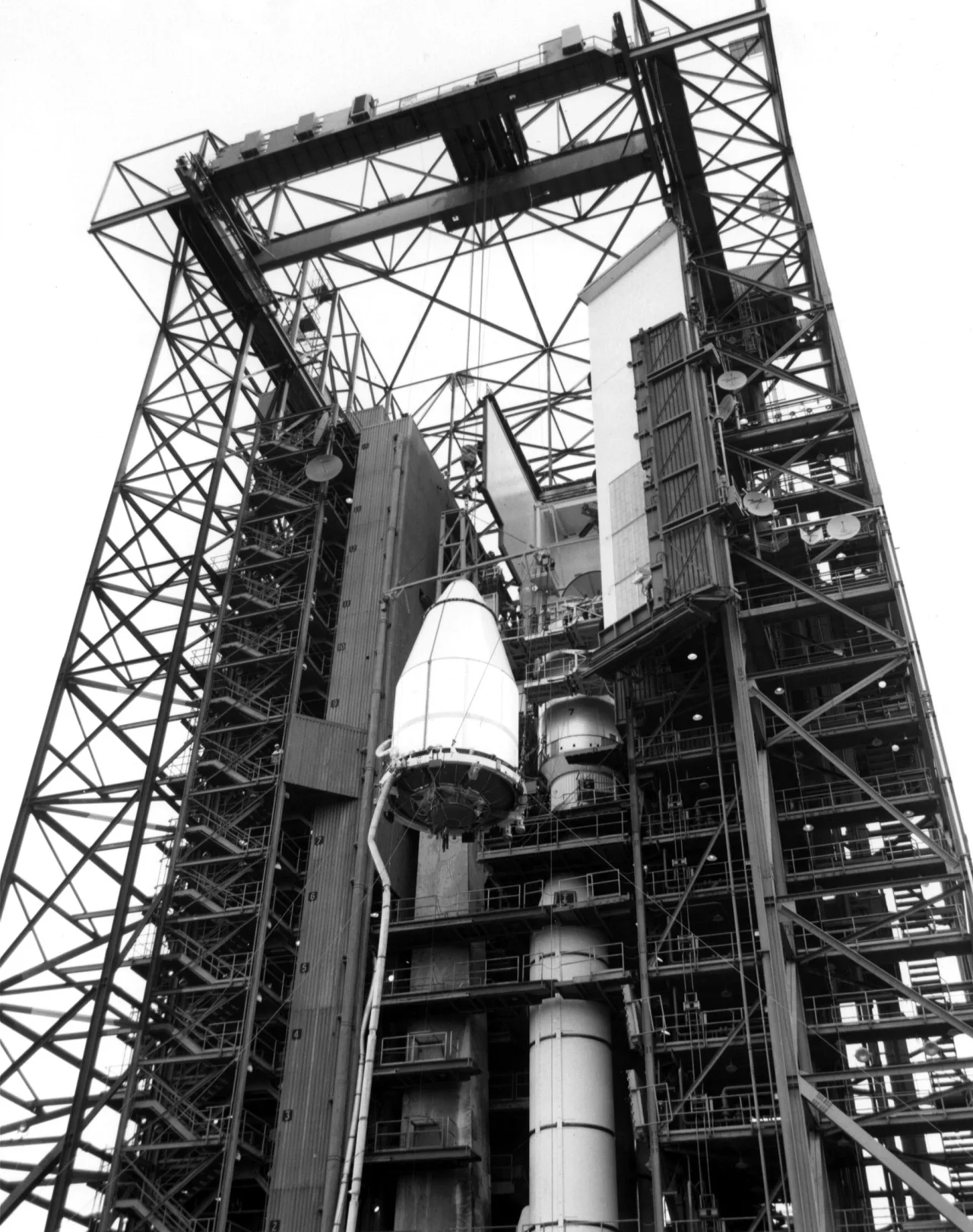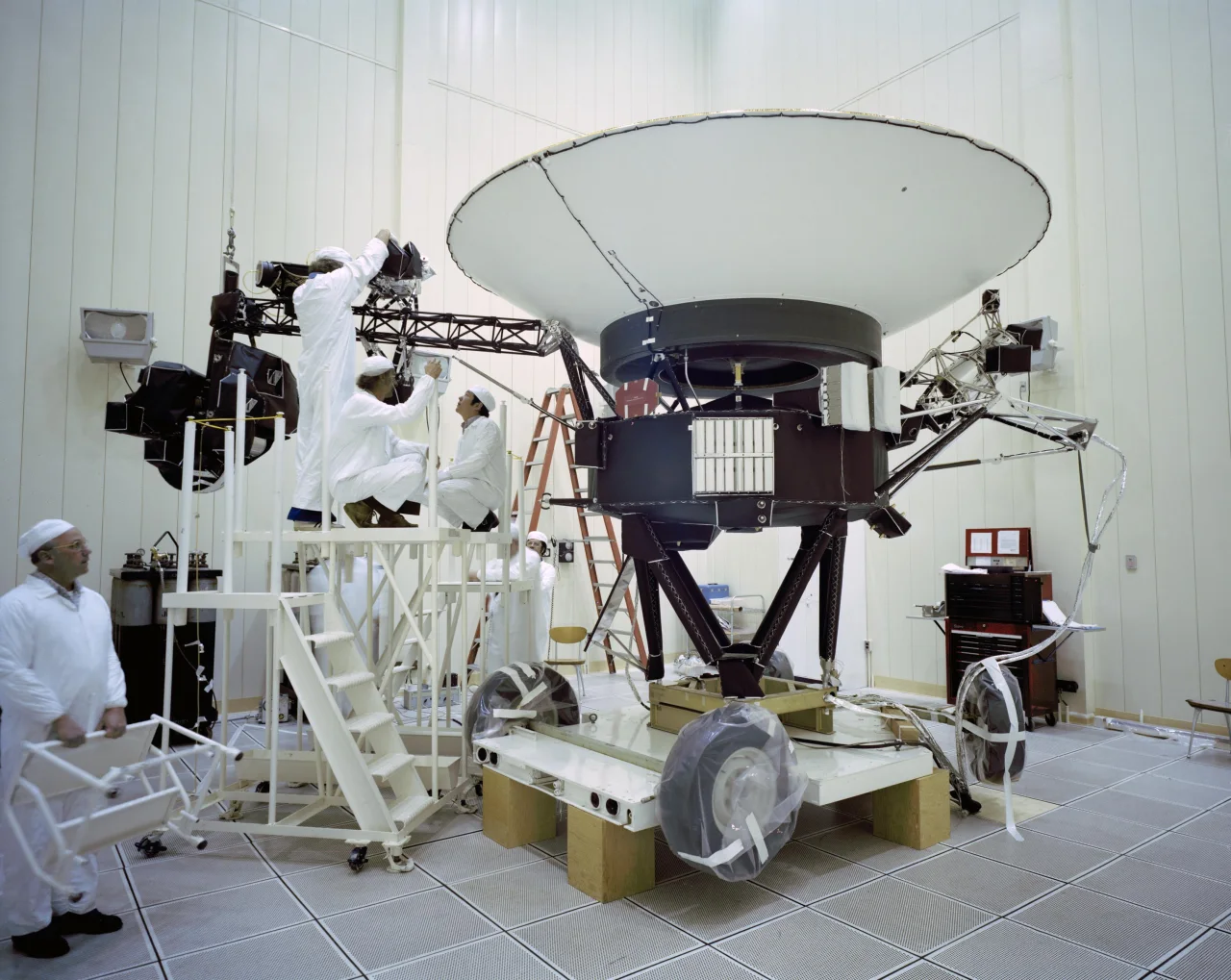
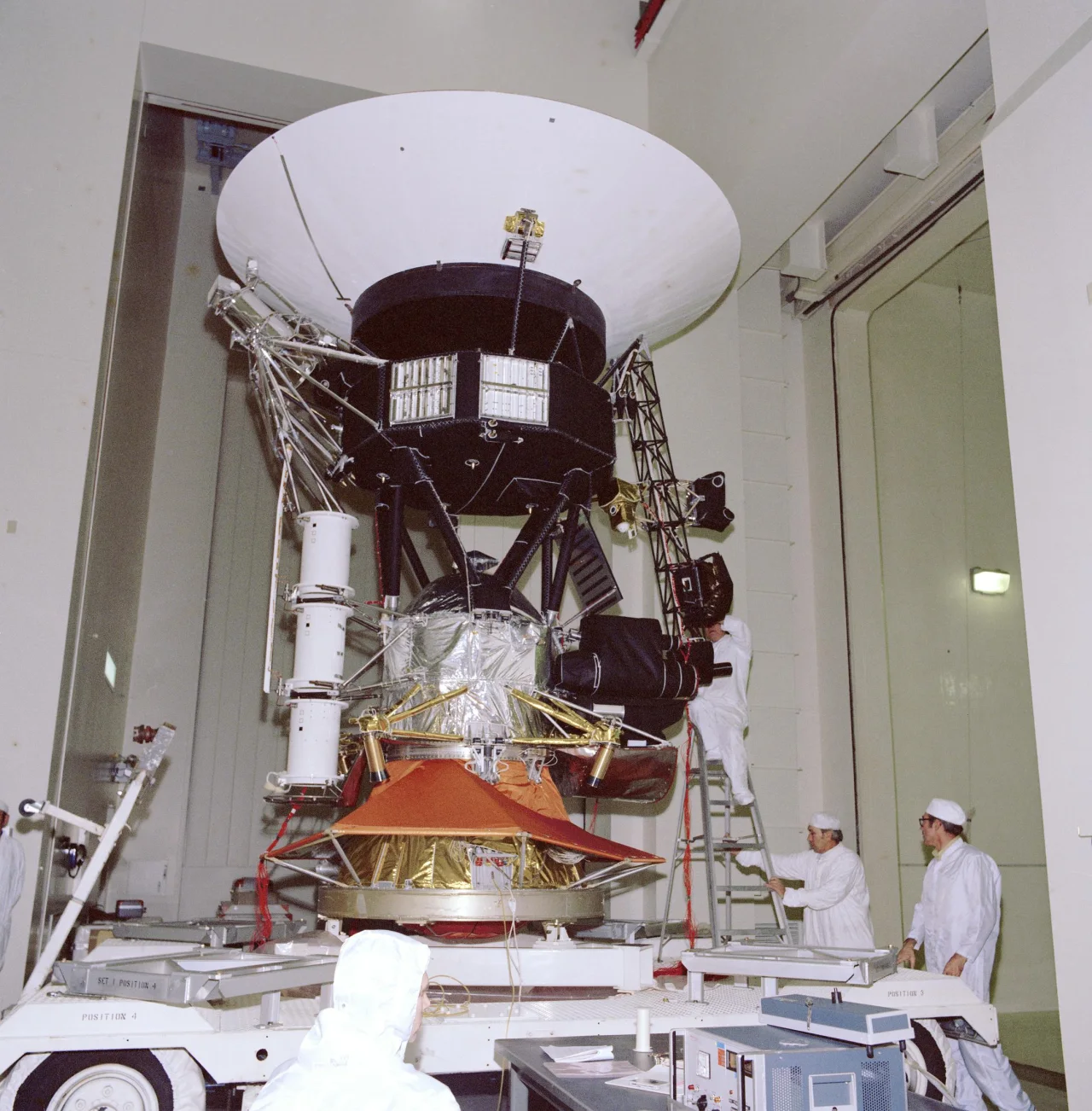
Engineers work on what would become Voyager 2, March 23, 1977. NASA/JPL-Caltech
In the summer of 1965, the Jet Propulsion Laboratory (JPL) calculated a route that would allow one spacecraft to visit all 4 giant planets. The opportunity would come in the late 1970s. To take it, NASA had to approve the mission, build 2 spacecraft, and learn to operate them from distances that meant waiting tens of minutes for a radio signal to arrive.
Where the idea came from
Astronomers had long studied Jupiter and Saturn from Earth. At a meeting in Woods Hole in the summer of 1965, the U.S. National Academy of Sciences’ Space Science Board proposed beginning exploration of the outer planets with flybys. Up close, researchers could study their atmospheres, measure magnetic fields, and see the rings and the surfaces of moons in detail. Comparing planets, they hoped, would help explain how the solar system formed. In a JPL prelaunch film, Rod Mills, who managed the Voyager program at NASA headquarters, said the team wanted to understand what the atmospheres were made of, how the clouds moved, and how much heat the planets absorbed from the Sun and radiated back into space.
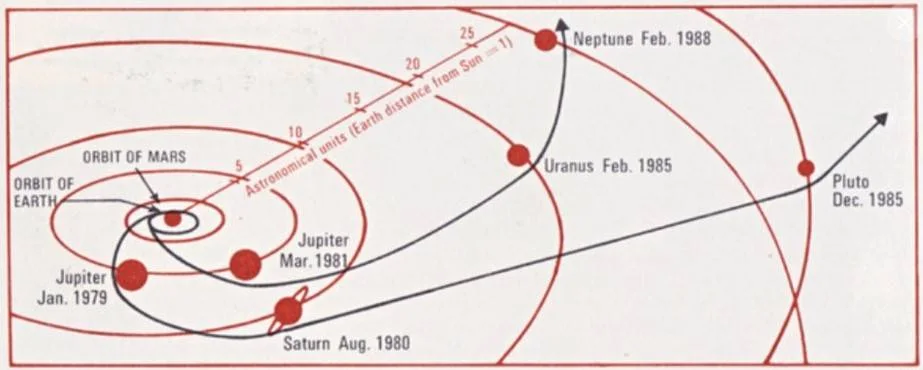
In 1965, Gary Flandro, a Caltech graduate student working at JPL, calculated how to send a spacecraft past Jupiter, Saturn, Uranus, and Neptune. He built on Michael Minovitch’s work on gravity assists. During a flyby, a moving planet’s gravity changes the spacecraft’s direction and can increase its speed relative to the Sun. With the right approach and flyby distance, the spacecraft can leave on a path toward the next planet. Flandro published his calculations in 1966.
The 4 giants line up this favorably about once every 175 years. NASA estimated that a series of gravity assists would cut the trip to Neptune from about 30 years to 12.
From 4 spacecraft to 2
In the early Grand Tour plan, NASA considered sending 4 spacecraft. 2 would fly past Jupiter, Saturn, and Pluto. The other 2 would visit Jupiter, Uranus, and Neptune. JPL designed the TOPS spacecraft to operate for years far from the Sun. Radioisotope generators would supply electricity, and the onboard STAR computer would detect faults and automatically switch to backup units. By the end of 1971, NASA had dropped this version of the plan because of its cost and competition for funding from projects including the Space Shuttle.
On May 18, 1972, NASA formally approved the less expensive Mariner Jupiter–Saturn 1977 project and put JPL in charge of development and assembly. The 2 spacecraft would study Jupiter and Saturn, their moons, rings, and magnetic fields in detail. Physicist Edward Stone became project scientist in 1972. On March 7, 1977, NASA Administrator James Fletcher announced that the mission would be called Voyager.
Why the mission needed 2 routes
The team studied more than 10,000 trajectories. The choice depended on which moons the team needed to see up close and where each spacecraft would go after Saturn. The science program was divided between the 2 flights.

Voyager 1 was assigned a shorter route to Jupiter and a close flyby of Titan during the Saturn encounter. Changes in the radio signal as it passed through Titan’s atmosphere would help the team measure its properties. That flyby geometry would send Voyager 1 north of the plane of the planets’ orbits.
Voyager 2 was assigned a different Saturn flyby, leaving the option of sending it on to Uranus and then Neptune. Whether it continued would depend on its condition after Jupiter and Saturn. Voyager 2 would launch first, while Voyager 1 was set to arrive at both planets sooner.
3 spacecraft were built and 2 flew
In Pasadena, engineers built 2 flight spacecraft and a third for ground testing. They used the test model to see how the structure would hold up under simulated flight conditions. The flight spacecraft were also tested under less severe loads. In the fall of 1976, engineers tested the equipment for vibration, noise, and the sudden shocks produced by pyrotechnic devices. In spring 1977, one of the spacecraft was tested in a thermal vacuum chamber at JPL.
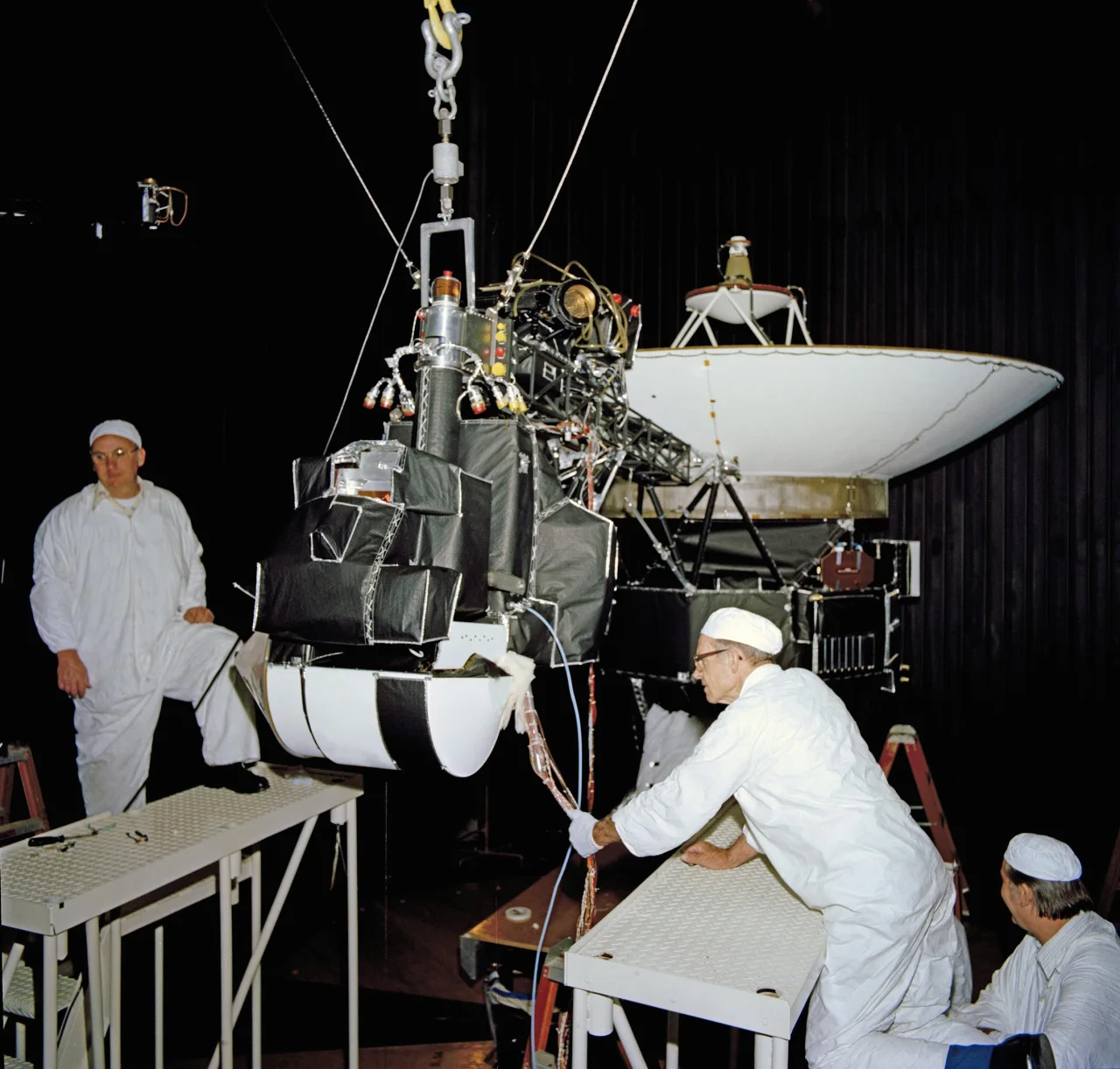
The design drew on Mariner and Viking. Each spacecraft carried 10 science instruments.
The radio link with Earth made one more experiment possible by measuring changes in the radio signal. Far from the Sun, 3 radioisotope thermoelectric generators supplied electricity to the instruments, computers, and transmitters. They converted heat from decaying plutonium-238 into electricity.
A dish antenna about 3.7 m across sent data back to Earth. Between communications sessions, the onboard computers carried out commands uploaded in advance. Each spacecraft had backups for 3 computer systems that handled command execution, data processing, and attitude control. Its Sun and Canopus sensors, attitude control thrusters, radio receivers, and transmitter amplifiers also had backups.
Rehearsing communications with Earth
Launch preparations extended to the ground stations. Engineers in NASA’s Deep Space Network checked that equipment worked together and practiced acquiring the signal after liftoff. Deep Space Station 12 at Goldstone rehearsed acquiring a signal from the fast-moving GEOS satellite. In the 3 weeks before Voyager 2 lifted off, the team used telemetry from the spacecraft itself while it was still at Cape Canaveral.
Stations in California, Australia, and Spain would take turns maintaining contact. JPL’s 1977 film shows the clean room, mission control, and the antennas at Goldstone. It estimated that a radio signal from Jupiter would take about 40 minutes to reach Earth.
The Golden Record
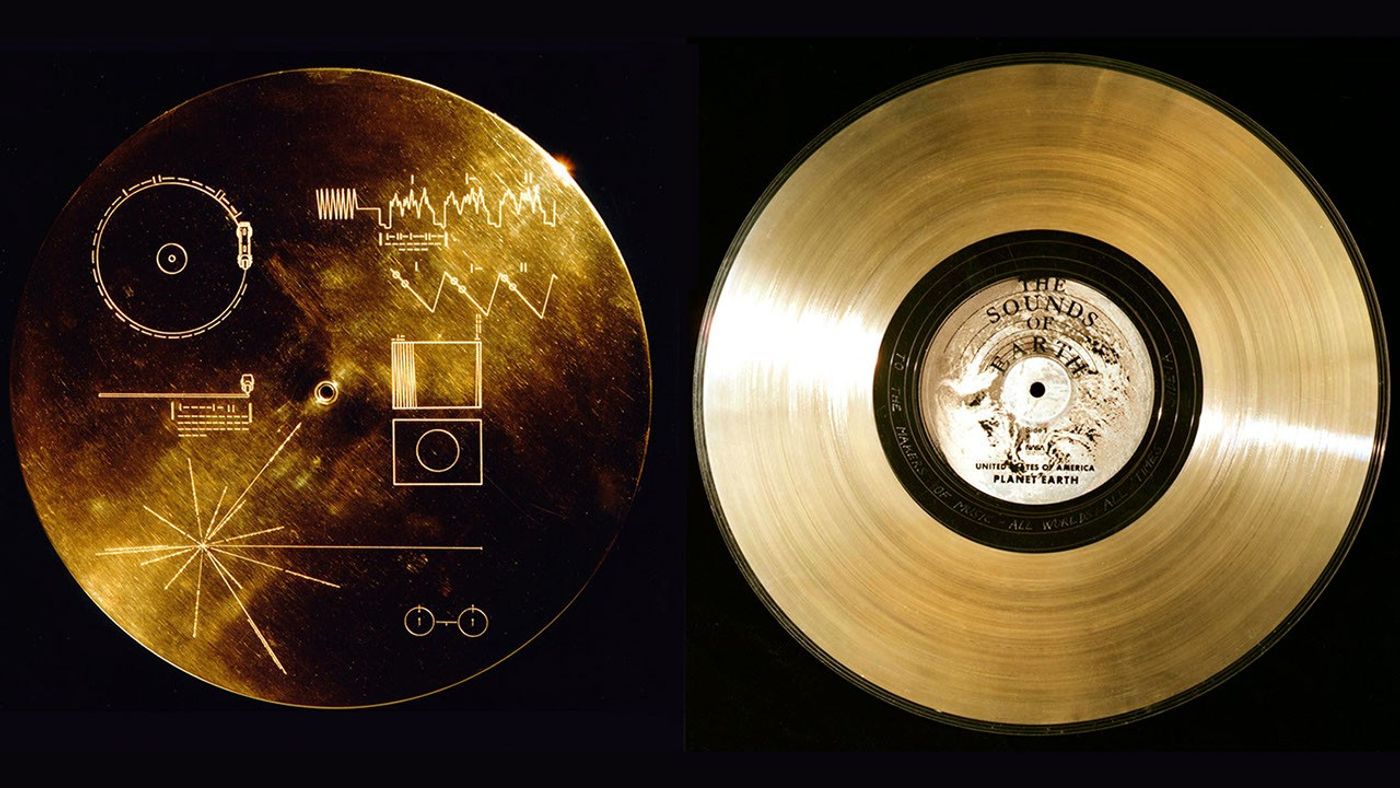
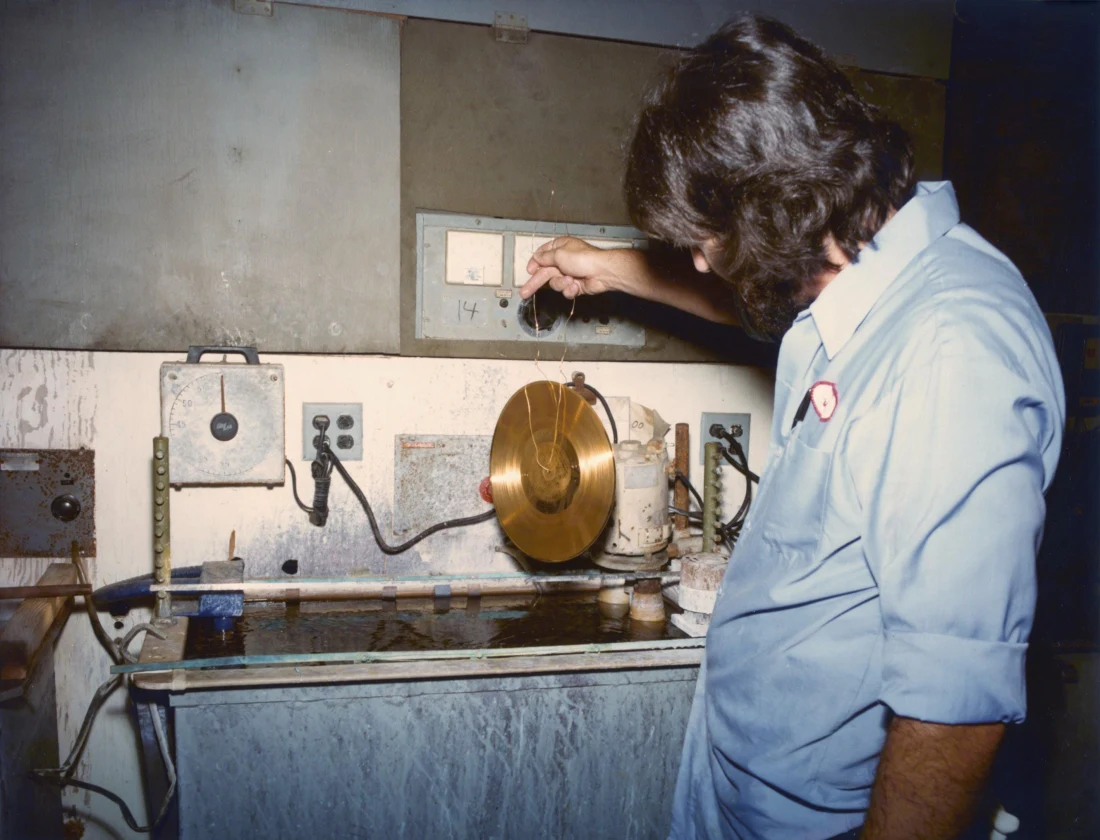
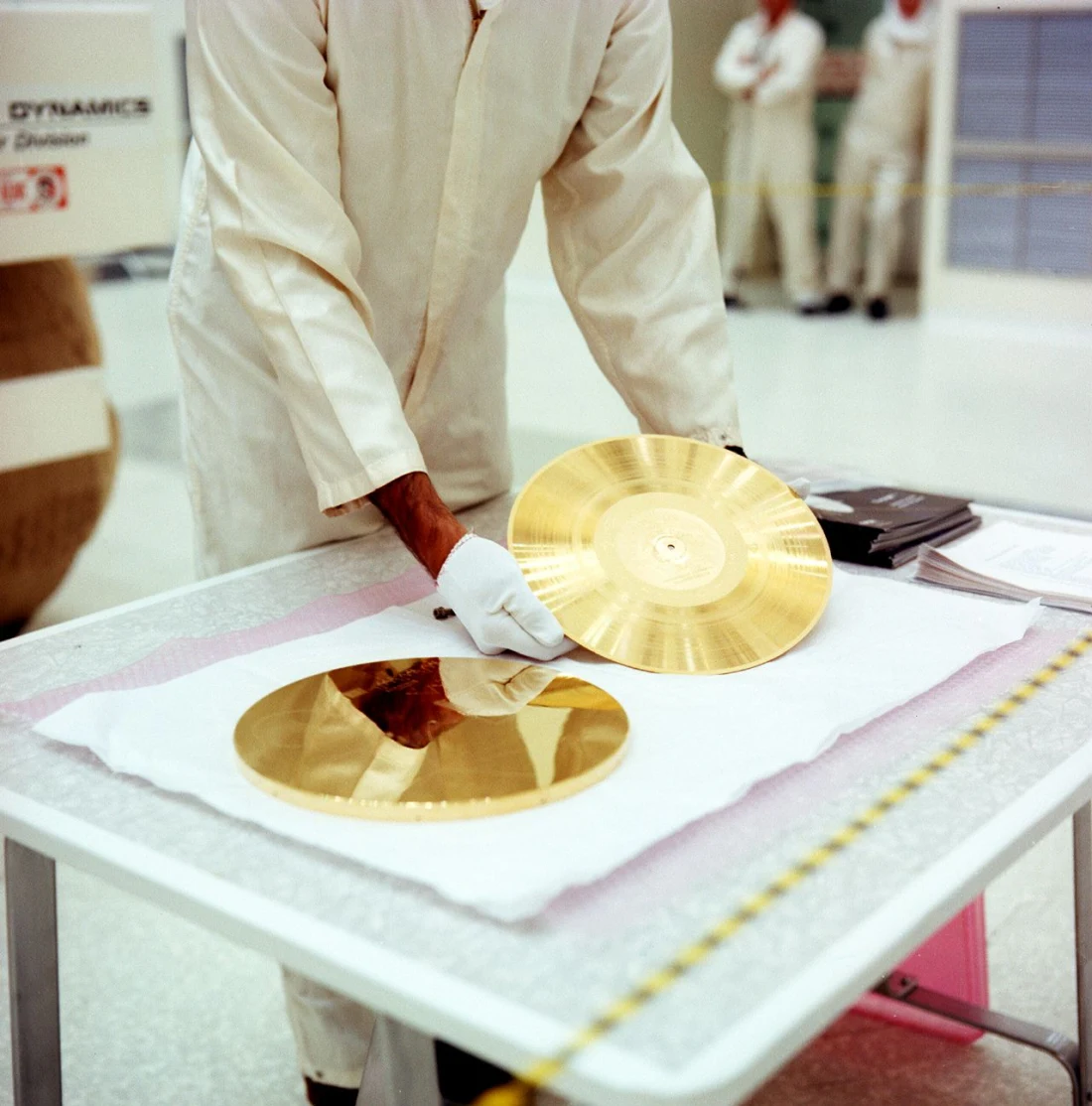
After sending plaques aboard the Pioneer spacecraft, NASA decided to send a fuller message about Earth with each Voyager. A committee led by Carl Sagan selected 115 images, sounds from nature and everyday life, music, and greetings in 55 languages. Linda Salzman Sagan brought the greetings together.
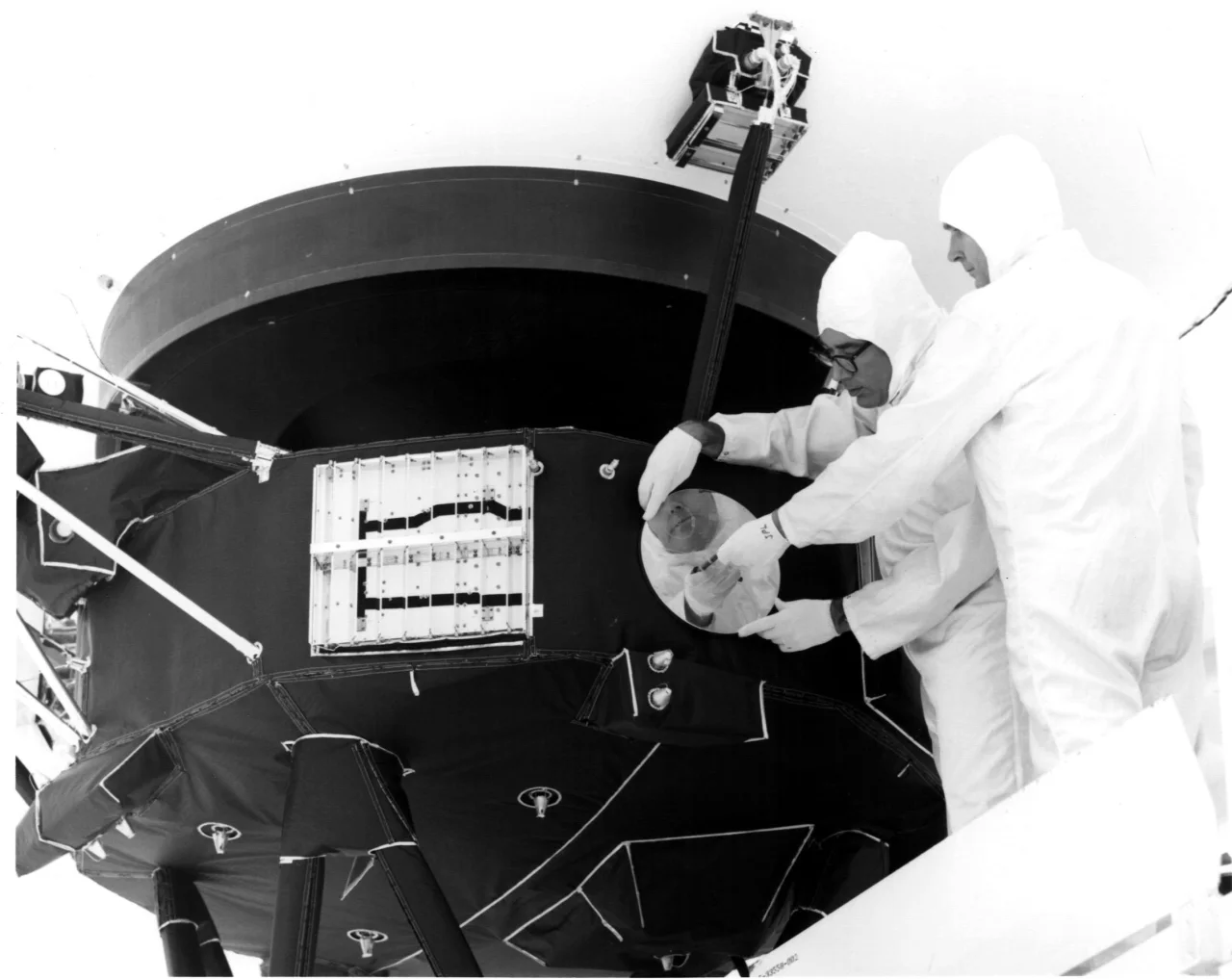
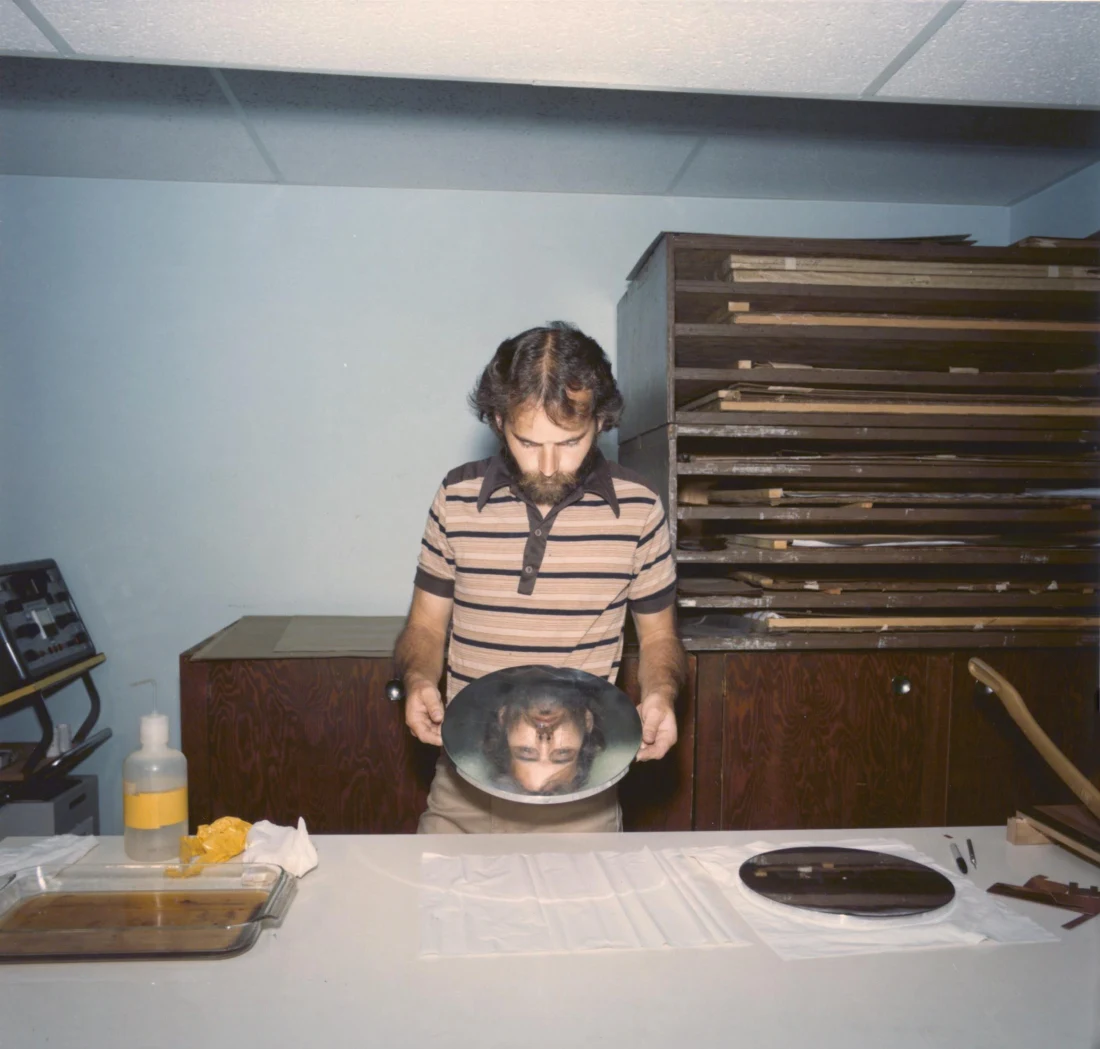
The recording was pressed onto a gold-plated copper disc about 30 cm across. An aluminum cover carried engraved instructions, and a stylus and cartridge were mounted with it. The first record was installed on Voyager 2 about 3 weeks before launch.
Why the flight spacecraft swapped launch slots
The flight unit designated VGR77-2 was originally scheduled to go first. Ground checks found faults in its attitude control and data handling systems. The team swapped the spacecraft. VGR77-3 would launch first and was named Voyager 2.
With the change in launch order, engineers moved the higher-output set of generators onto that spacecraft. Its route still offered the option of flying past Uranus, which would require it to operate considerably longer. Both Titan IIIE/Centaur launches were prepared at the same pad, Launch Complex 41 at Cape Canaveral.
A last-minute replacement
The low-energy charged-particle detector failed during final checks and had to be replaced. The team finished testing in time for August 20, 1977, the first day of the launch period.